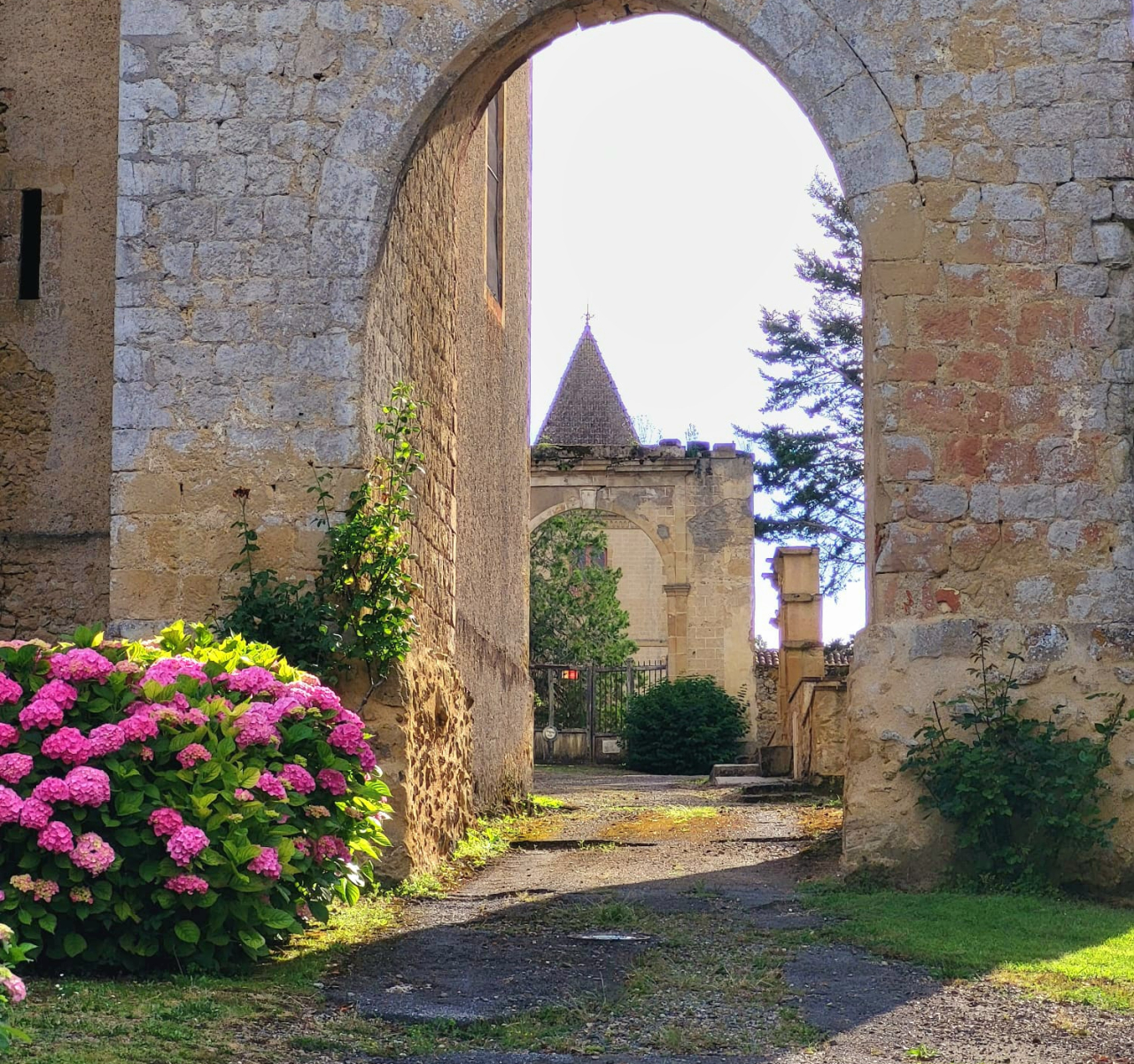

Mouchès
The village is located on a terrace of the nearby River Baïse.
Gallo-Roman occupation has been amply documented by numerous surface and excavated remains, revealing the existence of a villa, in particular a mosaic (late 4th century AD) incorporated into a wall of the church. The discovery in the heart of the village ofa small treasure trove of 91 coins (second half of the 3rd century AD) was part of this discovery.
This was followed by the establishment ofa monastery (Monasteris, which may have given the village its present name of Mouchès after successive deformations). After a period of autonomy, it passed to the Benedictines and then to the Cluniacs, and was particularly prosperous in the 12th and 13th centuries.
As early as 1361, the barons of the Ile d'Arbéchan (now the Ile-de-Noé) had tolls at Mouchès on the transit of goods, and these rights continued in other hands until the French Revolution.
In the 16th century, the Wars of Religion did not spare the site.
The Sainte Radegonde fountain, not far from the village and beside the road, was once thought to heal sick children and was the source of pilgrimages, like some 140 other consecrated fountains in the Gers.
You may also like